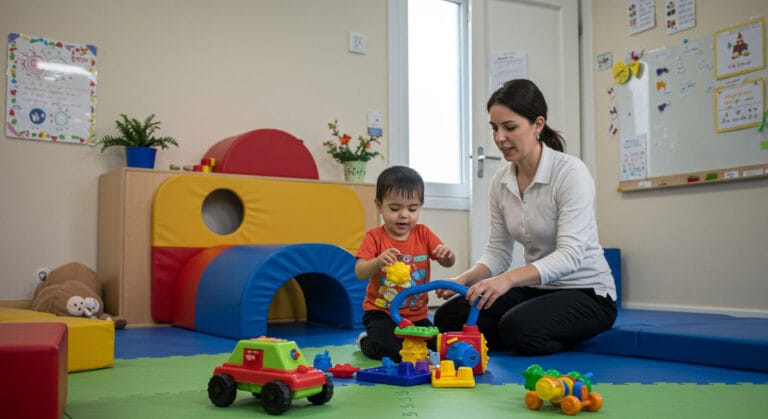
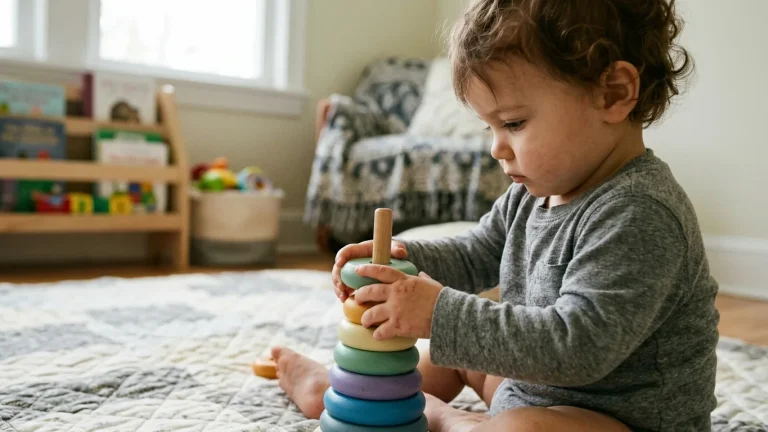
If your child says "tar" instead of "car" or "do" instead of "go", they are swapping k and g for t and d. A child mixing up k and g sounds in this way is showing a common speech sound pattern. In most children it is seen up to about age 4 and usually resolves on its own.
Child Mixing Up K and G Sounds: Why Does It Happen?
A child mixing up k and g sounds is usually going through a common speech pattern seen up to around age 4. Speech and language therapists call it "velar fronting", or simply "fronting". Below, we explain why it happens and what you can try at home.
In this article, we first explain why this sound mix-up happens. Then we look at when you should be concerned and which methods you can try at home.
What Causes the Mix-Up?
K and g are made with the back of the tongue, while t and d are made with the front. Young children learn to control the front of the tongue first, so they tend to replace back sounds with front ones. That is why this is seen as a normal developmental stage.
How Does Tongue Control Develop?
The front of the tongue is already busy from early baby movements such as sucking and feeding, so children gain control of it earlier. Control of the back of the tongue matures later, usually at around 3 to 4 years. So it is part of the expected order for back sounds such as k and g to settle late.
When Is It Normal, and When Is an Assessment Needed?
| Age | What to Expect |
|---|---|
| 2 to 3 years | The mix-up is normal, keep an eye on it |
| 3 to 4 years | It may continue but become less frequent |
| Over 4 years | If it is still noticeable, an assessment is recommended |
Things to Try at Home
First, rather than correcting your child, repeat the right sound back as a model. For example, when they say "tar", you can say "Yes, a car!" and stress the k sound. Games with animal noises that use k and g, such as "quack quack" or "cock-a-doodle-doo", also make practice fun.
Sound Awareness Games
Helping your child hear the difference between similar words, such as "key" and "tea" or "car" and "tar", strengthens their listening skills. Simple listening games like these help your child tell the two sounds apart by ear. This is the first step towards saying them correctly.
Back-of-Tongue Exercises
Games such as gargling, pretend coughing or a "coochie-coochie-coo" tickle game can raise awareness of the back of the tongue. These exercises do not teach k and g directly, but they support the use of this part of the tongue.
When Is Articulation Therapy Needed?
A mix-up that is still clearly present after age 4 can be supported with articulation therapy. For details, see our Articulation Disorder page. Our article on the child who cannot say the R sound covers a similar sound development process.
Steps in Therapy
The therapist usually starts by practising the sound on its own, then moves on to syllables and words. In the final stage, your child begins to use the sound spontaneously in everyday speech. This step-by-step approach helps your child feel successful at each stage and stay motivated.
Links With Other Sound Mix-Ups
The k-g and t-d mix-up sometimes appears alongside other patterns, such as mixing up s and sh. So a thorough assessment should look at your child's whole sound system, not just one sound. That way, the therapy plan can cover every area your child needs.
How Does This Mix-Up Look in Other Languages?
The k-g and t-d mix-up is not unique to English or Turkish. A similar developmental pattern is seen in many languages, because control of the front and back of the tongue follows a universal order. A child learning Turkish and English together may show it in both languages. The same child might say "tar" for "car" in English and "tedi" for "kedi" (cat) in Turkish. This does not mean the two languages are harming each other.
What Does the Assessment Look At?
During the assessment, the therapist checks which sounds your child mixes up consistently. They note whether the mix-up is more noticeable at the start, middle or end of words, and how easy your child's speech is to understand overall. This detailed picture helps set the right priorities for therapy. For details, see our article How Is a Speech and Language Assessment Done?
Siblings Copying Each Other
Younger children learn language partly by copying how their older brothers and sisters speak. If an older sibling had a similar sound mix-up, the younger child may copy it for a while. This is usually temporary. As the older child's speech improves, the younger one tends to follow.
Watch Closely Instead of Just Waiting
Some families wait a long time, thinking "it will sort itself out". But time passing without regular observation makes it harder to know when an assessment is needed. So instead of just waiting, jot down how your child speaks every few weeks to track progress. This eases worry and helps you act at the right time if needed.
The Benefits of Early Support
Getting early support for a sound mix-up that continues after age 4 protects both how clearly your child speaks and their confidence. Starting school with a noticeable speech sound difficulty can also make learning to read and write harder, because phonological awareness and speech sound skills are linked. So an early assessment helps with school readiness, not just speech.
A Simple Word List to Use at Home
At home, play games with short, familiar words that highlight k and g, such as "cat", "cup", "go" and "game". This way, your child hears and repeats these sounds more often. Matching the words to pictures or playing a simple "which word?" game turns repetition into fun rather than a chore.
Eating Habits and Speech Sounds
Long-term bottle use, or staying on very soft foods for too long, can mean the tongue and jaw muscles do not get strong enough. So moving on to age-appropriate solid foods matters not only for nutrition but also for the muscles used in speech. Foods that need chewing actively work different parts of the tongue and jaw. This indirectly supports speech sound skills.
Common Mistakes Parents Make
Some parents stop and correct their child every time a word comes out wrong. This usually reduces the child's wish to talk and can make them anxious. Modelling the right sound and creating relaxed chances to practise works much better. Also, rather than making your child repeat the sound on its own again and again, build natural repetition into everyday conversation. This helps the new sound stick.
The Family's Role in Therapy
Short, regular practice at home between sessions speeds up progress. Adding the target words your therapist suggests to daily routines, such as meals, play and bath time, helps the new sound settle in different situations. This consistent approach carries the effect of therapy beyond the session.
How Other Children at Nursery React
Nursery-age children sometimes notice that a friend speaks differently and may copy them or ask questions. This is usually not unkind, but it can make your child feel uncomfortable. Sharing the situation with the teacher, and asking for a gentle explanation to the class if needed, can help protect your child's confidence.
Sound Mix-Ups and Hearing
Rarely, a mild hearing loss can lie behind a sound mix-up that does not go away. When a child cannot hear sounds clearly, copying them correctly is harder. So if the mix-up is still clearly present after the age of 4 or 5, it is worth having your child's hearing checked alongside a speech sound assessment.
How the Mix-Up Can Affect Writing
In children starting to read and write, an ongoing k-g or t-d mix-up in speech can sometimes show up in writing too. A child may mix up the letters for the sounds they hear. So resolving the mix-up before school helps reading and writing go more smoothly, not just speech.
Frequently Asked Questions
At what age does this mix-up fully resolve?
Most children grow out of it on their own by about four to four and a half years old.
What should I do if practising at home does not help?
If it is still noticeable at around age 5, we recommend an assessment with a speech and language therapist. For details, see our Book an Appointment page.
How many sessions does therapy take?
It varies from child to child, but with regular attendance, clear progress is usually seen within a few months.
Can brothers and sisters have this too?
Similar speech sound patterns can appear in some families, but this does not always mean they are inherited.
What should a nursery teacher do if they notice it?
The teacher should share their observations with the family, and if needed, decide on an assessment together with them.
Does a k-g mix-up delay language development?
No. It usually affects only how certain sounds are made and does not affect overall language development.
Does this mix-up come with other sound mix-ups?
In some children, yes. A t-d or s-sh mix-up may also be present; a thorough assessment makes this clear.
Do back-of-tongue exercises work for every child?
They help most children but may not be enough on their own. If a clear mix-up continues, professional support is recommended.