Wondering how to get speech therapy for your child? It is simpler than most families expect. You do not need a doctor's referral: you can contact a speech and language therapy centre directly.
Parents often ask, "Where do I start?" This article walks you through each step, from your first notes to booking. It then explains what happens in the first session and how therapy works after that.
How to Get Speech Therapy: An Overview of the Steps
Before we go through each step, here is the big picture. You observe and take notes, request an appointment and attend a first assessment session. A therapy plan is then put together. Each step is explained in detail below.
Step 1: Write Down Your Concerns
Start by noting what you see in your child: for example, which sounds they find hard or how often they talk. Details like these make the assessment more productive.
What Information Is Useful?
Useful details include how long you have noticed the signs and whether anyone in the family had similar difficulties. Note how much the problem affects everyday communication, too. This helps the therapist understand the picture faster. If your child is growing up with Turkish and English, note which language each difficulty appears in. Mixing the two languages is usually a normal part of growing up bilingual. A difficulty that shows up in both languages is more important to mention. Keep your notes in a phone app or a notebook so nothing is forgotten at the appointment.
Step 2: Request an Appointment
Next, you can request an appointment by phone, WhatsApp or through our website. At this stage you do not need a doctor's referral or any other documents.
| Step | What it involves |
|---|---|
| 1. Observe | Write down your concerns |
| 2. Appointment | Request one by phone or WhatsApp |
| 3. Assessment | A thorough assessment in the first session |
| 4. Therapy plan | A plan based on the findings |
Step 3: The First Assessment Session
In the first session, the therapist observes your child in play and assesses their speech and language skills. They also listen to your family's history. The therapy plan is then shaped by what this assessment shows. For more detail, see our Speech and Language Therapy page. Our article How a Speech and Language Assessment Works covers the process step by step.
Step 4: Starting Therapy
If the assessment shows a need, regular therapy sessions are planned. Your family also receives practical ideas to support your child at home. Our article on activities that support language development at home may help here.
How Is Session Frequency Decided?
Frequency depends on your child's needs and your family's availability. Most children start with one or two sessions a week. Over time, progress is reviewed and the number of sessions can go up or down. This flexible approach lets every family build a plan that fits their own schedule.
What to Look for When Choosing a Centre
When choosing a centre, consider the therapists' areas of expertise and the approaches they use. Check whether the setting is child-friendly, too. It also helps to ask how parents are involved and whether therapy will be supported at home. If English is your family's language, ask whether therapy and parent meetings are available in English. At Çocukla Akademi, all therapies and family meetings are available in English. Bilingual Turkish-English sessions are also offered for children who use both languages.
The Physical Setting
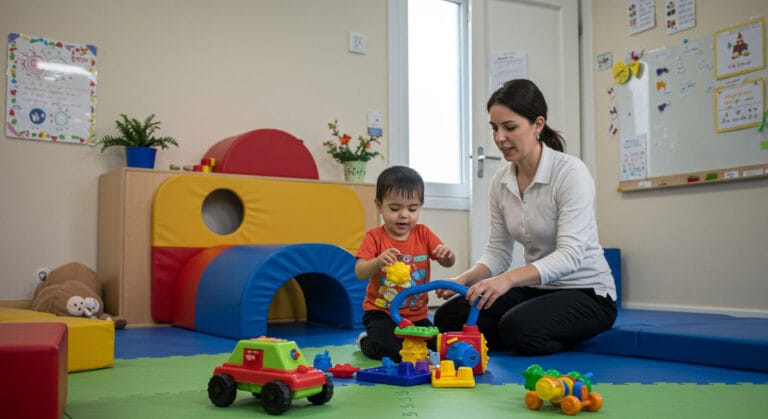
Therapy rooms that are child-friendly, safe and free of distractions make sessions more productive. A comfortable waiting area also helps, especially for families who bring a younger sibling along.
Why the Match With the Therapist Matters
Your child's relationship with the therapist directly affects how well therapy works. So after the first few sessions, watch how your child responds to the therapist. If there is a clear mismatch, share it with the centre. Continuing with a different therapist is a reasonable option if needed.
When Support Is Needed in More Than One Area
Some children with a language delay also show differences in motor skills or attention. In that case, speech and language therapy alone may not be enough. Support such as occupational therapy may also be needed. Ask whether the centre offers different specialities under one roof. This saves families from running between different providers.
Questions About Fees and Payment
Some families want to know how assessment and therapy fees work. Contact the centre directly before your appointment to get clear information. That way there are no surprises at the start. A transparent fee policy is one of the key signs of a trustworthy centre.
Session Packages
Some centres offer packages of sessions instead of single sessions. This can lower the cost for families who attend regularly. Before buying a package, though, check that the assessment shows therapy is really needed at that frequency.
Preparing for the First Session
Choose a time of day when your child is not tired or hungry, as this helps the first session go well. Instead of saying "we're going to the doctor", try something reassuring such as "we're going somewhere to play together". This can ease your child's worries. Bringing a small favourite toy also helps some children settle in.
Extra Tips for Shy Children
For children who find new places hard, talk about the centre in simple, positive words a few days before the appointment. Some centres also offer a short get-to-know-you meeting before the first session. This lets your child meet the therapist in advance and build trust.
Follow-Up Appointments After Therapy
Even after therapy goals are reached, some centres suggest follow-up appointments at set intervals. These make sure that new skills are here to stay. Follow-up sessions help spot any setback early, so you can act quickly if needed. The end of therapy does not mean your child's language development stops being monitored.
When a Sibling May Also Need an Assessment
When one child is found to have a language delay, parents sometimes wonder whether a sibling has a similar difficulty. In that case, it helps to watch the sibling's development too. If you have doubts, plan a separate assessment. Noticing early gives every child the chance of early support.
How Long Is the Wait After You Get in Touch?
The time from your request to the first meeting varies between centres. It usually ranges from a few days to a few weeks. It may take a little longer in busy periods. If you have concerns, getting in touch early is the most practical way to keep the wait short.
Questions to Ask at the First Meeting
At the first meeting, ask the therapist how long therapy is likely to last, what its goals are and what you can do at home. It can also help to ask about the therapist's experience and how they have worked with similar children. If your child is bilingual, ask which language the sessions will be held in. Open communication helps both therapist and family focus on the same goals.
How the Process Differs by Age
For babies and toddlers, the first assessment relies mostly on parent observations and play. With preschool children, the therapist looks more closely at understanding, sentence building and speech sounds through structured play. For school-age children, language skills linked to schoolwork are also included. So the process varies a little with age, but the basic steps stay the same.
Speech Therapy for Teenagers
Speech therapy is not only for young children. Teenagers with difficulties in articulation, fluency or social communication can also benefit. At this age, the young person's own motivation and involvement make the process stronger. That is why it is best to involve the teenager in the decision from the start.
Options for Families Who Live Further Away
All assessments and therapy sessions take place in person at our centre in Beykent, Büyükçekmece. This is because they rely on direct interaction with your child. Beykent sits right on the Beylikdüzü border. That puts the centre within reach of families across west Istanbul, including Beylikdüzü, Bahçeşehir, Avcılar, Esenyurt, Silivri and Çatalca. Contact us to find session times that suit your journey.
Common Doubts Before Getting in Touch
Some families put off getting in touch, thinking "maybe it will sort itself out". Others hesitate, wondering "am I overreacting?" These doubts are completely normal. But a first assessment is not a commitment to therapy; it simply clarifies where your child is now. Knowing how to get speech therapy removes most of these doubts. When you are unsure, booking an assessment instead of waiting gives you concrete information and peace of mind.
Tracking Progress During Therapy
During therapy, progress is reviewed at regular intervals and goals are updated. This keeps therapy in step with your child's development. Parents usually stay in regular contact with the therapist and share what they see at home. This makes therapy more effective. At our centre, these progress updates can also take place in English.
Frequently Asked Questions
What information should I prepare before booking?
Your child's age, your own observations, any previous assessment reports and the languages your child hears at home are enough.
Is the assessment done in person?
Yes. The first meeting and the full assessment take place in person at our centre in Beykent, Büyükçekmece, because the therapist needs to play and talk with your child.
Which areas does the centre serve?
Our centre is in Beykent, Büyükçekmece, on the Beylikdüzü border, and welcomes families from Beylikdüzü, Bahçeşehir, Avcılar, Esenyurt, Silivri and Çatalca. For directions, see our Our Centre page.
Can we take a break once therapy has started?
Yes, you can take a break if needed, although attending regularly usually brings faster results.
How do I book an appointment?
Message us on WhatsApp or call +90 537 373 44 19. For details, see our Book an Appointment page.
Is there a minimum age for speech therapy?
No, you can contact us about a child of any age. Getting in touch early usually means support starts sooner.
How long is the first session?
The first assessment session usually lasts 40 minutes, so please set aside enough time.
Is there a wait before therapy starts?
Waiting times vary, but the first meeting can usually be arranged shortly after your request.