

Head banging in toddlers is usually a wordless way of expressing a feeling, a need or pain. It is especially common between the ages of 1 and 3 and usually fades on its own. In this article we explain 6 possible causes, the warning signs and safe ways to reduce head banging at home.
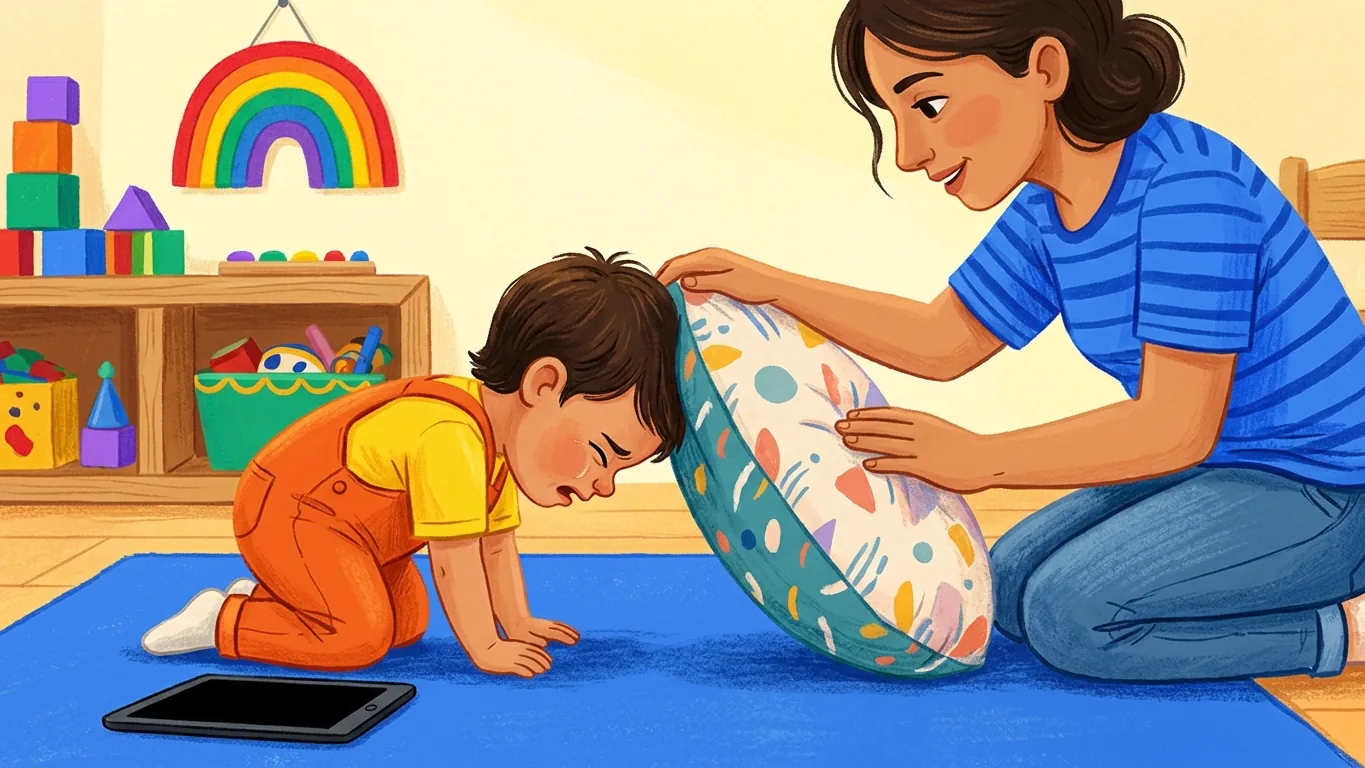
At a first meeting, a father showed us a short video on his phone. In it, his twenty-month-old daughter sat down on the floor when her tablet was taken away, then hit her forehead twice on the wooden floor.
Then he asked: "Every time, we rush over and pick her up. But it seems to be getting worse. Is this autism, or is she just being stubborn?"
In fact, the answer is not a single word. What matters with head banging in toddlers is not the movement itself but when, where and why it happens. So let us first separate what is typical from what needs a closer look.
Head Banging in Toddlers: Typical or a Concern?
First, know this: head banging is more common in young children than most parents think. For example, Nemours KidsHealth describes occasional head banging as mostly a way of self-soothing or releasing frustration.
However, frequency, force and other signs change the picture. That is why the table below helps you make a first distinction.
| Feature | Usually developmental | Worth an assessment |
|---|---|---|
| Age | Between 6 months and 3 years | Continuing or increasing after age 4 |
| When does it happen? | While falling asleep or during a tantrum | Throughout the day, with no clear trigger |
| Force | Gentle, leaves no mark | Causes bruising, swelling or bleeding |
| Other skills | Speech, play and eye contact are age-appropriate | Delays in speech, play or social communication |
| Stopping | Stops once distracted or calm | Carries on for a long time despite redirection |
Of course, this table is not a diagnostic tool. Even so, if a single item in the right-hand column applies, it is wise to talk to a specialist.
At What Age Does Head Banging Start?
Head banging usually starts in the second half of the first year. At this stage a baby typically knocks their head rhythmically against the pillow or the side of the cot while falling asleep. Body rocking and rolling the head from side to side belong to the same family of movements.
In 1978, Sallustro and Atwell followed 525 healthy children. The researchers found head banging about three times more often in boys. Moreover, the children who banged their heads were not behind in their developmental milestones.
| Age | Common form | Worth raising |
|---|---|---|
| 6-12 months | Rhythmic banging and rocking while falling asleep | It seriously disrupts sleep or leaves marks |
| 12-36 months | Banging on the floor or wall during tantrums | Several times a day, and words are behind |
| 3-4 years | Becomes rarer, often only before sleep | Daytime episodes are increasing |
| Over 4 years | Has disappeared in most children | If it continues, the cause needs looking into |
6 Possible Causes of Head Banging in Toddlers
Head banging has no single cause. In fact, several causes often sit together in the same child. So we have gathered the causes and the first step for each into one table.
| Cause | Clue | First step |
|---|---|---|
| Self-soothing | At bedtime, in the dark, when tired | A safe bed, an alternative rhythm |
| Anger and frustration | After a "no", when something is taken away | Name the feeling, teach a replacement way to communicate |
| Pain | Started recently, always on one side, restless sleep | Paediatrician, ear and teeth check |
| Sensory seeking | Seeks hard surfaces, enjoys falling | Occupational therapy assessment, daily movement |
| Attention loop | Looks at you before banging, increases with an audience | Calm response, plenty of attention at good moments |
| Developmental conditions | Comes with delays in speech and social communication | Developmental assessment |
1. Self-soothing and falling asleep
First, rhythmic movement calms the nervous system. For example, a baby who is rocked to sleep later creates that rhythm on their own. As a result, they knock their head against the pillow at regular intervals and drift off.
This kind of head banging is usually harmless. What is more, the child is content when they wake up. We cover head banging during sleep under a separate heading below.
2. Anger and frustration
This is the most common reason we see in families of toddlers who bang their heads. A two-year-old feels strong emotions but does not yet have the words for them. So the feeling spills over into the body.
This cycle is especially clear in children whose speech is delayed. Indeed, banging usually decreases as words increase. For managing angry moments in general, see our article on temper tantrums.
3. Pain and discomfort
Similarly, a child who cannot talk also expresses pain without words. For example, an ear infection, teething or constipation can trigger head banging. A 2003 study by Breau and colleagues also examined the link between self-injury and pain in non-verbal children.
So if the behaviour started suddenly, see your paediatrician first. Also, if your child always hits the same ear or the same side, be sure to mention it to the doctor.
4. Sensory seeking
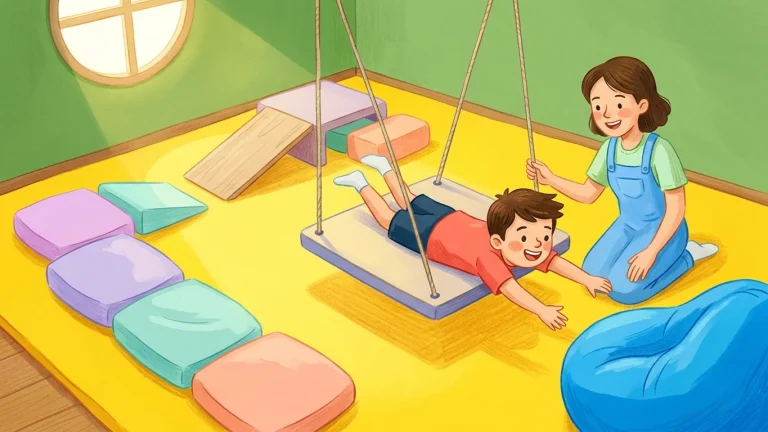
Some children need strong input to the body. For example, these children seek out hard surfaces, throw themselves on the floor and love tight hugs. So head banging can meet a missing need for deep pressure and movement.
That is why this pattern is the domain of occupational therapy. We have gathered similar signs in our article on signs of sensory processing disorder.
5. The attention loop
When a child bangs their head, parents naturally rush over. Of course, this is a very human reaction. However, some children gradually learn that the movement brings everyone running.
In that case the child often looks at you before banging. Also, the behaviour hardly ever appears when no one is in the room. The answer is not to withdraw attention but to move it to calm moments.
6. Developmental conditions
Self-injurious behaviour is also more common in autism, developmental delay and some genetic conditions. In these children, head banging often comes together with other signs. That is why the next section looks at this in detail.
Is Head Banging a Sign of Autism?
No, not on its own. Indeed, KidsHealth stresses that in most children head banging is not a sign of another problem. The healthy sample of Sallustro and Atwell supports the same conclusion.
On the other hand, self-injury is more common in autistic children. For example, Soke and colleagues studied 692 autistic children in 2018. According to parent reports, 28 per cent showed self-injurious behaviour at the time and 47 per cent had shown it at some point in their lives.
So the real question is this: what else comes with the head banging? If you notice the signs below, ask for a developmental assessment:
- Does not respond to their name consistently
- Does not point with a finger to share interest
- Eye contact is brief and infrequent
- Has few words for their age or has lost words they used before
- Play is repetitive, for example always spinning wheels or lining up objects
For the general list, read our article on signs of autism. For children aged 16-30 months, the M-CHAT screening done by your family doctor or paediatrician can be a first step. Our centre does not diagnose and does not carry out screening tests.
When Should You See a Doctor Straight Away?
However, some situations cannot wait. If a child who has hit their head on a hard surface shows any of these signs, go to A&E or your paediatrician the same day:
- Vomiting, unusual drowsiness or difficulty waking after the knock
- Any loss of consciousness, however brief, a seizure or staring spells
- Blood or clear fluid coming from the nose or ear
- Unsteady walking or weakness in one arm
- New bruising around the eyes or behind the ear
There are also situations that are not urgent but need an appointment within a few days. For example, do not wait if head banging leaves marks every day or becomes more frequent during the day. Likewise, speak to someone promptly if your child has lost a skill they had before.
The form of tantrums in the preschool years also matters. In 2008, Belden and colleagues compared 279 children aged 3 to 6. Self-harm during tantrums was clearly more common in the group with depressive symptoms than in healthy children.
So for a child over three who hurts themselves in every tantrum, it is right to seek a child psychiatry opinion. This does not always mean an illness, but it deserves a closer look.
What Should You Do in the Moment?
First, in the moment the goal is not to teach but to keep your child safe. When emotions peak, a child cannot really hear you. So follow this order:
- Stay calm. Lower your voice, because a raised voice increases your child's tension.
- Soften the surface. Put your hand or a cushion between their head and the surface.
- Say little. One sentence such as "I'm here" is enough; skip long explanations.
- Simplify the space. Move hard objects away and, if needed, carry your child onto a rug.
- Wait. Once their breathing slows, move closer and offer a cuddle.
- Then connect. When they are calm, name the feeling: "The tablet finished, you were really angry."
Also avoid certain reactions. For example, shouting, punishing or saying "If you bang your head, you can have the tablet" strengthens the behaviour. Long negotiations during head banging also feed the cycle.
7 Ways to Reduce Head Banging at Home
In fact, real change happens in calm moments. A child can only learn a new skill when they are calm. The approaches below work together.
1. Find the function of the behaviour
First, work out what head banging gets your child. For example, do they want something, are they escaping something, or is their body looking for input? The diary below answers this question.
2. Teach a replacement way to communicate
In 1985, Carr and Durand showed something important: behaviour problems are often a form of non-verbal communication. So teaching a child an easier way to express the same need reduces the behaviour.
You can choose a word, a sign or a picture card for this. For example, show the "help" sign every time they struggle and help them straight away. For children who are not talking yet, our guide to PECS and AAC can help.
| Function of head banging | Skill to teach instead | Everyday example |
|---|---|---|
| Wanting something | The word or card for "give" or "more" | Saying "open" when they cannot open the biscuit tin |
| Ending or escaping | A "finished" sign, a break card | Showing "finished" when they want to get out of the bath |
| Asking for help | The word or sign for "help" | Holding out your hand when they cannot put a shoe on |
| Wanting attention | Touching your shoulder, saying "look" | Touching you and pointing when the tower is finished |
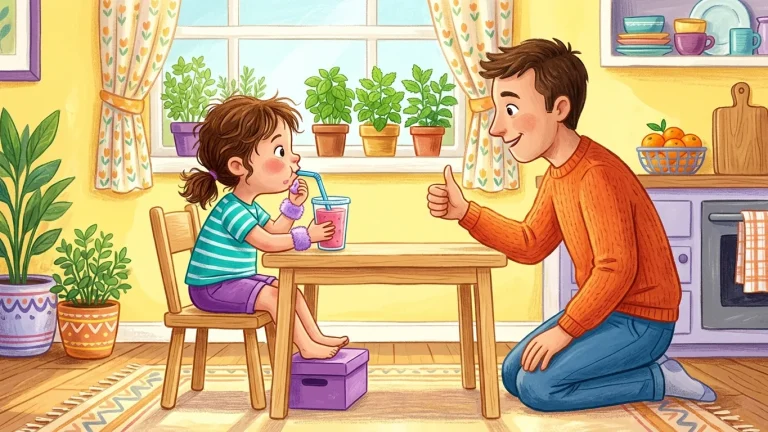
| Seeking body input | Safe deep pressure and movement | A cushion sandwich, jumping on a trampoline |
3. Name feelings
Name feelings during calm moments of the day. For example, say about a character in a book: "Look, he's cross, he's stamping his foot." This way your child gradually links the feeling with a word.
4. Make the day predictable
Transitions are usually the most common trigger. So give a warning before the tablet, the park or bath time ends: "Two more slides, then home." A picture schedule of the day also reduces your child's anxiety.
5. Give the body regular movement
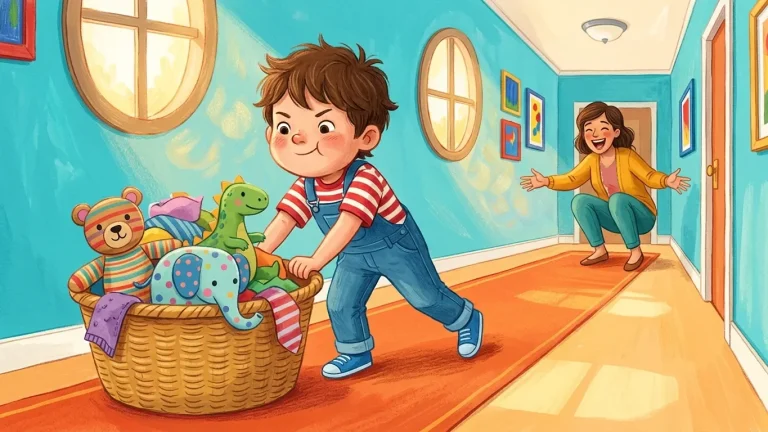
A child with sensory-seeking needs strong input every day. For example, wheelbarrow walks, carrying a heavy basket and being rolled up in a blanket meet this need. For a detailed programme, read our article on the sensory diet.
6. Grow the good moments
Also, sit beside your child and join in when they are playing calmly. Then they no longer need head banging to win your attention. These moments strengthen your bond too.
7. Watch for pain
If head banging has increased together with fever, night waking or a poor appetite, suspect pain. In that case a medical check comes first. Once the pain passes, the behaviour often eases on its own.
Behaviour Diary: What Should You Record?
First, briefly record every episode of head banging for one week. This record makes things easier for you and for the specialist. The question "what happened just before, and what happened just after?" gives the most information.
| Column | What to write | Example |
|---|---|---|
| Time and place | When and in which room did it happen? | 6.40 pm, living room |
| Just before | What changed, what was asked? | Tablet switched off |
| Behaviour | How many times, where, how hard? | Twice on the wooden floor, no mark |
| Just after | What did you do, what did your child get? | Picked up, tablet given back |
| General state | Sleep, illness, hunger | Skipped afternoon nap |
After a few days the diary usually shows a pattern. For example, if most episodes come with evening tiredness, tackle the sleep routine first. Similarly, if they always come at transitions, focus on the warning routine.
Head Banging During Sleep: Rhythmic Movements
Some children bang their heads only while falling asleep or when they wake in the night. Specialists call these sleep-related rhythmic movements. A 2019 study by Prihodova and colleagues notes that these movements are common in young children and decrease with age.
Fortunately, this is mostly harmless. Even so, make the bed safe: move it slightly away from the wall and check the cot screws often. Also offer a calm rhythm before sleep, such as gentle rocking or a lullaby.
However, if the movements seriously disrupt sleep or cause injury, talk to your paediatrician. In that case a sleep assessment may be needed.
Is a Helmet or Protective Gear Necessary?
No, not for most children. Developmental head banging rarely causes serious injury. Moreover, wearing a helmet all the time limits movement and does nothing about the cause of the behaviour.
That said, some children who bang their heads often and hard need protection for a while. However, only a doctor or the treatment team should make this decision. Protective gear is also always used together with a behaviour plan.
How Does Therapy Help Head Banging in Toddlers?
First, at our centre we try to understand the need behind head banging in toddlers. Then the specialists in our team work together around that need:
- Speech and language therapy: Teaches the child to express needs with a word, a sign or a picture card. More on our speech and language therapy page.
- Occupational therapy and sensory integration: Meets the need for body input with safe activities. See sensory integration therapy.
- DIR/Floortime: Strengthens emotional regulation and two-way communication through play. See what is DIR/Floortime.
- Parent guidance: We adjust reactions and daily routines at home together. See parent guidance.
A 2008 review by Tiger, Hanley and Bruzek summarises that teaching a replacement form of communication is one of the most effective approaches for severe behaviour problems. So we apply this principle within a play-based framework. Medical investigation of causes belongs to paediatrics and paediatric neurology.
4 Myths About Head Banging
"A child who bangs their head is definitely autistic"
False. Head banging also appears in a large share of healthy children. What matters is how other skills, such as communication and play, are developing.
"If you ignore it, it will go away"
Partly true. Not making a scene matters, but you still need to keep your child safe and meet their need. Otherwise your child may try banging harder.
"Punishment will make them stop"
False. Punishment suppresses the behaviour for a while but does not solve the need underneath. In fact, head banging increases as stress rises.
"It causes brain damage"
In fact, this is very rare with developmental head banging. Still, know the urgent signs above and see a doctor if the banging leaves marks.
Frequently Asked Questions
Is head banging in toddlers normal?
Most of the time, yes. Head banging is common between 1 and 3 years, especially during tantrums and while falling asleep. However, if it leaves marks or comes with developmental delay, an assessment is needed.
Is head banging a sign of autism?
Not on its own. Self-injury is more common in autism, but what matters are other signs such as eye contact, pointing and speech.
My child bangs their head on the floor when angry. What should I do?
Stay calm in the moment, put your hand or a cushion under their head and say little. Name the feeling once they are calm. In calm moments, teach a word or sign they can use to express their need.
Why does a baby bang their head while sleeping?
Rhythmic movement calms the nervous system as a baby falls asleep. It is mostly harmless and decreases with age. If it seriously disrupts sleep or causes injury, talk to your doctor.
At what age does head banging stop?
In most children it clearly decreases around 3 to 4 years. If it continues or becomes more frequent after age 4, look into the cause with a specialist.
Which signs are urgent after a child hits their head?
Vomiting, unusual drowsiness, loss of consciousness, a seizure, blood or fluid from the ear or nose and unsteadiness are urgent. In that case, go to A&E the same day.
Should I ignore head banging?
Do not make a scene, but do not leave your child alone either. Keep them safe and respond briefly and calmly. Give your main attention to the moments when your child is calm and communicating.
Why do children with speech delay bang their heads more?
Because they have fewer words to express their feelings and wants. As communication grows through words, signs or picture cards, head banging usually decreases.
Which specialist should we see for head banging?
Start with your paediatrician. If needed, paediatric neurology or child psychiatry will assess your child. Occupational therapists and speech and language therapists then support sensory and communication needs.
Related Articles
For the general picture of repetitive movements, read our article on what stimming is. For speech delay, see our guide to the 2-year-old who is not talking. Our articles on sound sensitivity and social stories can also help.
Sources and Further Reading
The figures and definitions in this article are based on the following peer-reviewed studies and institutional pages.
- Sallustro F, Atwell CW. Body rocking, head banging, and head rolling in normal children, Journal of Pediatrics, 1978.
- Belden AC, Thomson NR, Luby JL. Temper tantrums in healthy versus depressed and disruptive preschoolers, Journal of Pediatrics, 2008.
- Soke GN et al. Self-injurious behaviors in children with autism spectrum disorder enrolled in the Study to Explore Early Development, Autism, 2018.
- Breau LM et al. Relation between pain and self-injurious behavior in nonverbal children with severe cognitive impairments, Journal of Pediatrics, 2003.
- Carr EG, Durand VM. Reducing behavior problems through functional communication training, Journal of Applied Behavior Analysis, 1985.
- Tiger JH, Hanley GP, Bruzek J. Functional communication training: a review and practical guide, Behavior Analysis in Practice, 2008.
- Prihodova I, Skibova J, Nevsimalova S. Sleep-related rhythmic movements and rhythmic movement disorder beyond early childhood, Sleep Medicine, 2019.
- Nemours KidsHealth. Is Head Banging Normal?