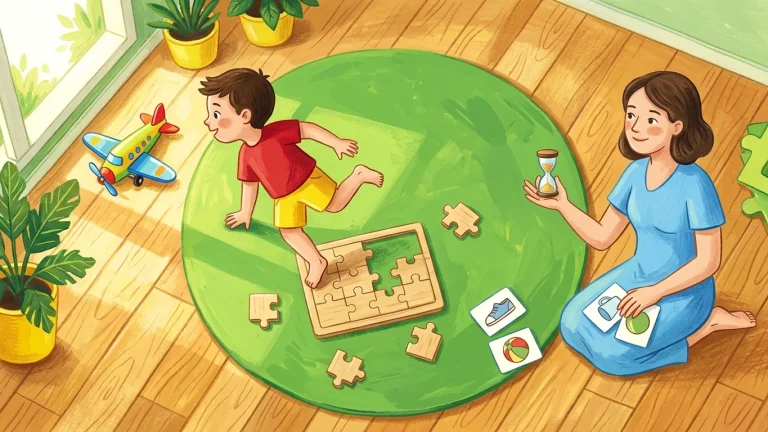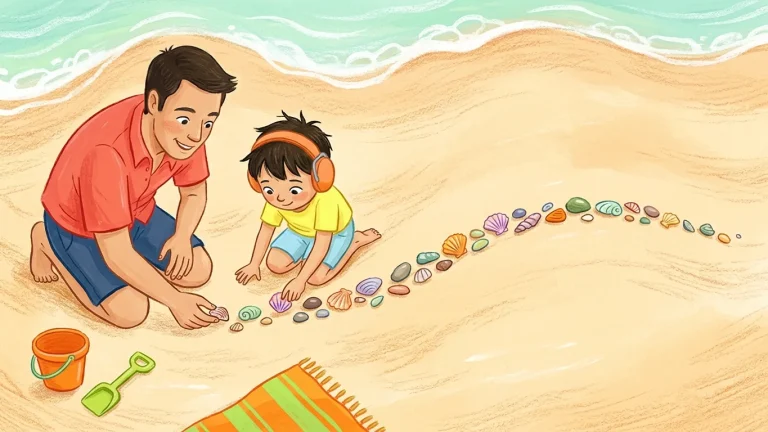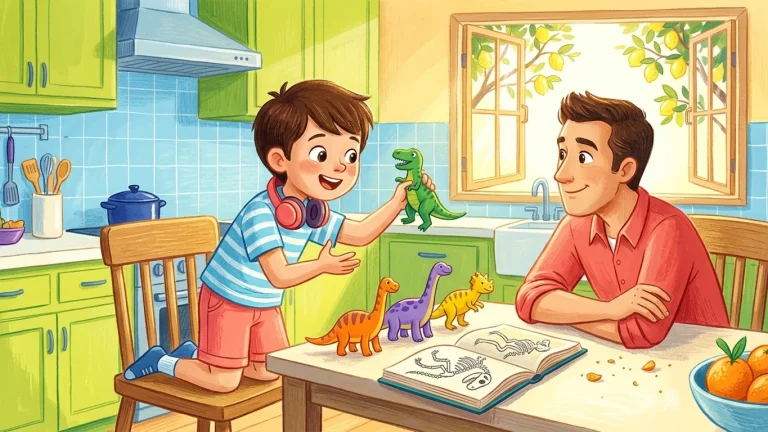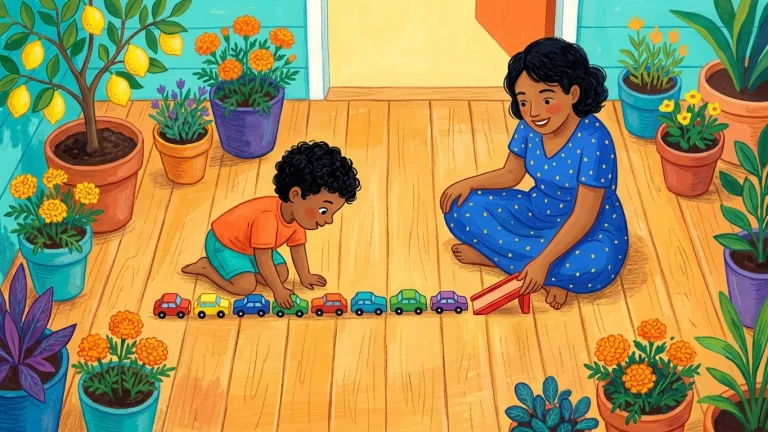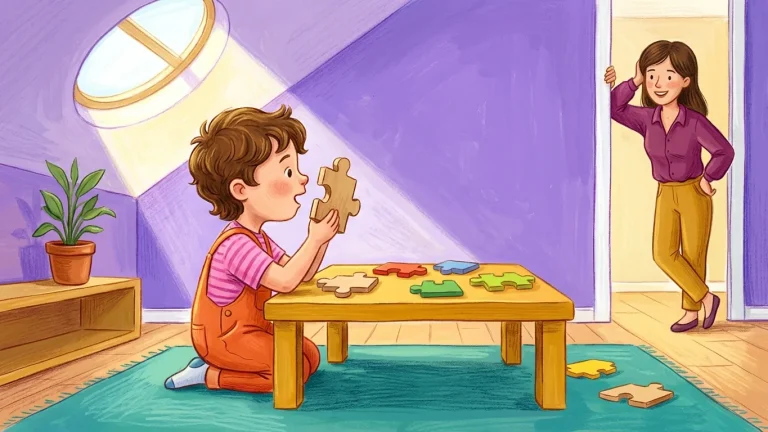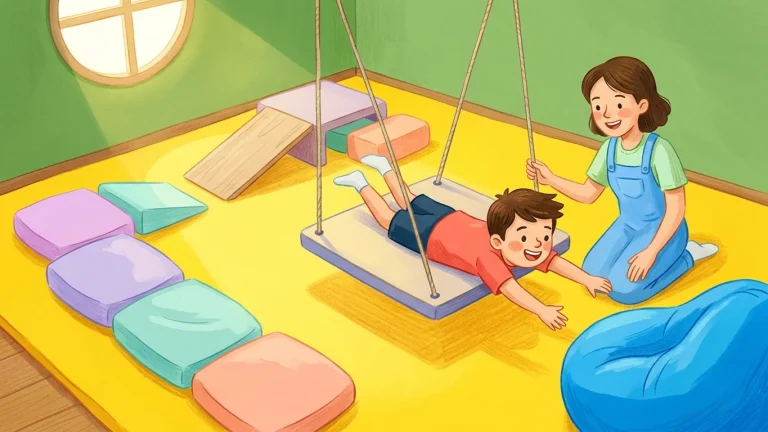
Proprioception is the deep body sense that comes from the muscles and joints and tells the brain where the body is and how much force it is using. Thanks to proprioception, a child holds a cup without crushing it, climbs stairs without looking down and hugs a sibling without hurting them. In this article we explain how proprioception works, the 5 signs you may see when it struggles, what to expect at each age and 12 games you can play at home.
For example, at our first meeting six-year-old Kerem's mother handed us a list with a smile. It read: slams doors, snaps the tips of his crayons, makes his little sister cry when he hugs her.
What is more, Kerem did not sit down on the sofa, he threw himself onto it. His teacher had also said that he kept leaning on the other children in the queue. So the family thought it was simply "too much energy".
In fact, Kerem's body was sending him incomplete information. He could not fully feel how much force his arm was using.
So he always set his strength too high. What is this system, then, and how can you support proprioception at home?
What is proprioception?
First, try a small experiment. Close your eyes and touch the tip of your nose with your index finger. You find the target even though you cannot see your finger.
That is proprioception at work. Tiny receptors in the muscles, tendons and joints follow every movement. They then tell the brain the angle of the arm, the tension in the muscle and the speed of the movement.
Indeed, the comprehensive review by Proske and Gandevia does not treat proprioception as a single feeling. According to the review, proprioception combines the senses of position, movement, effort, force and heaviness. So when a child lifts a box, proprioception tells them both where their arm is and how heavy the box feels.
In everyday language proprioception is also called the "deep sense" or "body awareness". Some sources call it the "sixth sense". In short, all of these names describe the same sense.
Proprioception does 3 jobs in daily life
Because proprioception works silently, most families only notice it when something goes wrong. Yet it is part of almost every movement in a child's day. The table below sums up its three main jobs and what you see when each one struggles.
| Job | Everyday example | What you see when it struggles |
|---|---|---|
| Body map | Putting a hand into a coat sleeve without looking | Cannot find the sleeve when dressing, always looks at their feet on stairs |
| Grading force | Holding an egg without cracking it or a plastic cup without crushing it | Presses too hard with a pencil, often breaks toys, hugs too tightly |
| Calming and focus | Sitting calmly in class after carrying a heavy bag | Constant crashing, pushing, jumping and fidgeting |
The third row needs a little explanation. For example, many occupational therapists see in clinic that movements which load the muscles help children feel more organised.
However, this effect is not the same for every child. So check it by watching how your own child responds.
Proprioception, touch and balance: what is the difference?
Parents often mix up these three senses, because they work together. For example, when a child skips, balance, touch on the soles of the feet and proprioception in the leg muscles all switch on at once. Still, each one sends different information.
| Sense | Where are the receptors? | What does it tell the brain? | Example |
|---|---|---|---|
| Touch | In the skin | What is touching the body and where | An itchy clothing label |
| Balance (vestibular) | In the inner ear | The speed and direction of the head | Swinging on a swing |
| Proprioception | In muscles, tendons and joints | Body position and the force being used | Knowing how hard to push a door |
We explain the balance sense in detail in our article on the vestibular system. For children who overreact to touch, see our guide to tactile sensitivity.
5 signs of difficulties with proprioception
Seeing one of the signs below on its own does not mean there is a problem. After all, every child gets clumsy when tired or rough when excited. However, if several signs carry on together for weeks, an assessment of proprioception is worthwhile.
1. They cannot grade their strength
For example, the child slams doors, breaks Lego pieces while pushing them together and hits when they mean to stroke. They also press a pencil hard enough to tear the paper. We cover this separately in our article on the child who presses too hard when writing.
2. They seek crashing and pushing
They throw themselves onto the floor, the bed or the sofa. They also lean on friends, love rough play and jump all the time.
On the other hand, some children press their head into soft surfaces. For a child who bangs their head on hard surfaces, our article on head banging in toddlers can guide you.
3. Their body map is blurry
For example, the child struggles to put a hand into a coat sleeve. They also look at their feet on every step of the stairs.
What is more, they often bump into objects and people. This picture sometimes appears together with developmental coordination disorder.
4. Their posture is floppy
For example, they slump over the table, prop their head on a hand and choose the W position when sitting on the floor. Because weak proprioception gives them less feedback from their muscles, sitting upright takes more effort. Our articles on W-sitting and hypotonia give more detail.
5. They seek strong input through the mouth
Pen lids, shirt collars or hard foods are always in the mouth. For example, some children love crunchy foods such as carrots and crackers.
That is because the jaw muscles also produce proprioception input. If biting is part of this seeking, have a look at our article on toddler biting.
Why does proprioception work less well in some children?
In most children there is no single, clear cause. In fact, difficulty with proprioception is not the name of an illness but a way of processing. Even so, we meet it more often in certain developmental conditions.
- Autism: Sensory differences affect daily life in a large share of autistic children.
- ADHD: Seeking movement and crashing often overlaps with attention difficulties.
- Developmental coordination disorder: Difficulty planning movement goes hand in hand with a blurry body map.
- Low muscle tone: Because the muscles are floppy at rest, the child works harder to stay upright and often seeks deep input.
That said, many children have none of these conditions. For example, Kerem's development was age-appropriate in every other area. So rather than linking the behaviour to a diagnosis, look first at its effect on daily life.
The seeking child and the child who does not notice
Difficulty with proprioception does not look the same in every child. The Winnie Dunn model, widely used in occupational therapy, helps tell two different pictures apart. In other words, one child actively seeks input, while the other notices incoming input late.
| Situation | Seeking child | Child who does not notice |
|---|---|---|
| At the playground | Jumps off the slide again and again, loves collisions | Sits at the edge, joins in late |
| At the table | Rocks on the chair, bangs the table | Slumps over the table, tires quickly |
| In social play | Hugs hard, pushes, invites wrestling | Notices a friend's touch late |
| Getting hurt | Seems to feel little pain from bumps | Notices bruises only later |
| First goal | Turn the seeking into safe, planned play | "Wake up" the body before play |
Some children also show both pictures. For instance, a child who looks sleepy in the morning may jump non-stop in the afternoon. So watching your child's rhythm across the day tells you more than any single label.
On the other hand, the first question about a child who never stops moving is usually ADHD. We compare the two in our article ADHD or sensory seeking.
Proprioception by age: what to expect
First, keep in mind that grading force and body awareness mature over years. So a two-year-old knocking over a cup is completely expected. However, the table below only gives a general frame, not strict limits.
| Age | Common in most children | Worth watching |
|---|---|---|
| 1-2 years | Frequent falls, dropping things heavily, pushing everything to explore | Never wanting to climb, using one side of the body less |
| 3-4 years | Climbing stairs with alternating feet, squashing and shaping play dough | Constant crashing, breaking toys every day |
| 5-6 years | Holding a pencil with medium pressure, trying to catch a ball | Pencil pressure that tears paper, clear difficulty dressing |
| 7 years and over | Doing up buttons without looking, keeping a distance in the queue | Hurting friends without meaning to, leaning on others in class all the time |
How does it look at school and nursery?
The classroom is one of the places where difficulties with proprioception show most. Because a child has to sit for hours, wait in line and work with a pencil. That is why teachers often notice these signs before parents do.
For example, the child stands too close to a friend in the queue or pushes them without realising. Also, pressing hard on the pencil makes the hand tire quickly when writing. What is more, they rock on the chair or push with their feet under the table.
When you talk to the teacher, describe the behaviour as "a body need" rather than "naughtiness". Then try these small adjustments together:
- Standing at the back of the queue and leaving an arm's length to the child in front.
- Handing out books or wiping the board at the start of the lesson.
- Pressing the palms together and pushing for ten seconds before writing.
- Using a chunky pencil or a pencil grip.
What to say during rough play
Saying "gently" or "don't hurt" often does not work. Because a child with weak proprioception cannot feel the difference between "gentle" and "hard" in their body. Instead, use language that makes force concrete and visible.
- Name the force: Agree on two levels such as "feather hands" and "rock hands". First, try both together on a cushion.
- Show it straight away: Place your child's hand on your arm and press lightly as you say "this is feather hands".
- Catch the right moment: Say you noticed as soon as they touch gently. This way the child learns how the right force feels.
- Offer a way out: When the urge to wrestle comes, say "Push the cushion, not your sister" and give them a safe target.
This language works especially well between siblings. Also, if you share the same words with the teacher, the child learns one system at home and at school. For rough behaviour during anger, our article on managing temper tantrums can guide you.
When should you see a specialist?
If any of the following has lasted for a few weeks, ask for an occupational therapy assessment:
- Your child often hurts friends without meaning to and is left out of games because of it.
- They cannot grade their strength at all with a pencil, scissors or fork.
- Seeking crashes and jumps puts them or others in danger.
- Dressing, stairs and ball games are clearly harder than for children their age.
On the other hand, some signs need a doctor first. For example, loss of muscle strength, losing movements they could already do or a change in the way they walk are reasons enough to see a paediatrician. The doctor will then refer you to paediatric neurology if needed.
12 games that build proprioception and body awareness
The games below load the muscles. This way proprioception tells the child clearly where their body is.
Some of them also train force grading directly. We explain how to fit them into the daily plan in our article on the sensory diet.
At home
- Shopping helper: Give them the job of carrying light bags from the car to the kitchen.
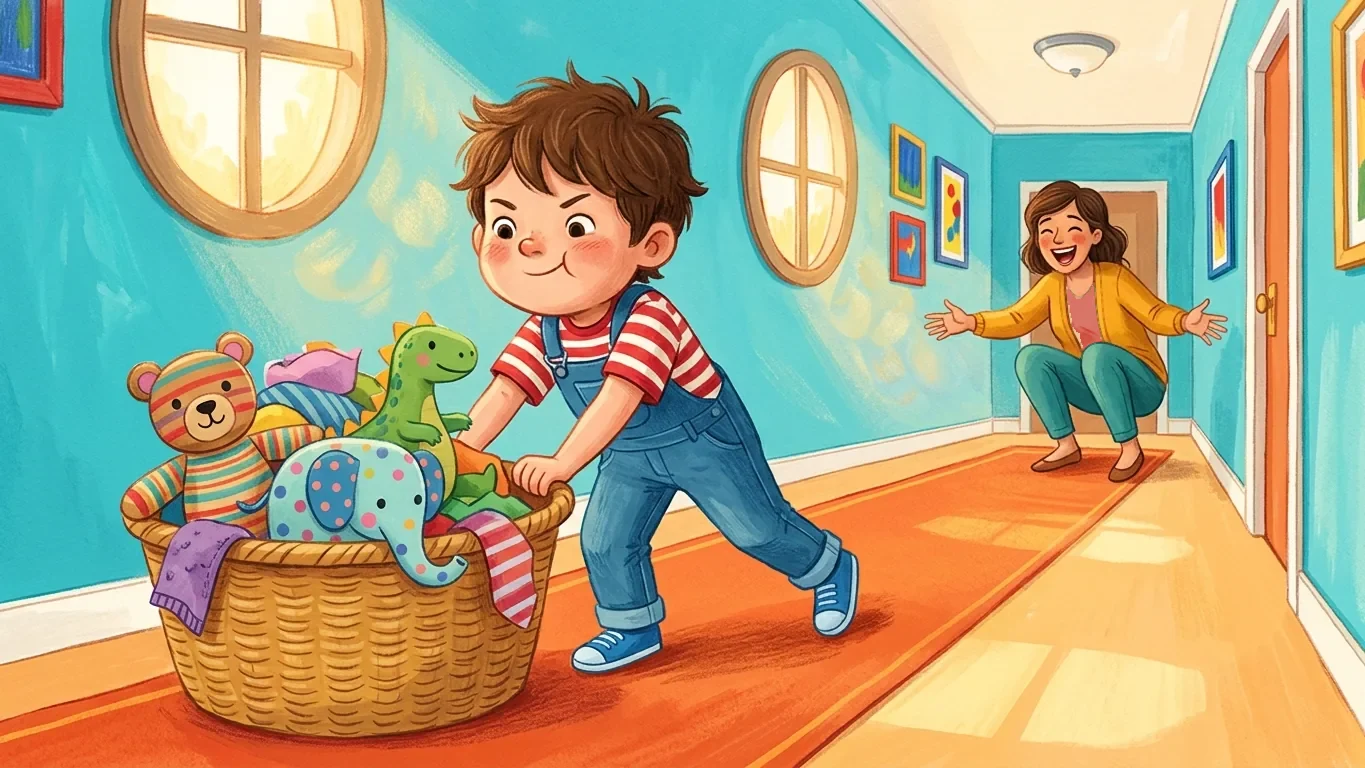
- Laundry basket train: Let them push a full basket from one end of the hallway to the other.
- Push the wall race: Both of you put your palms on the wall and push for ten seconds to "hold the house up".
- Dough pizza maker: Kneading firm play dough and flattening it with a rolling pin works the hand muscles.
Outdoors
- Animal walks: Cross the path on all fours like a bear, sideways like a crab or jumping like a frog.
- Wheelbarrow: Hold their legs while they walk a few steps on their hands.
- Little digger: Let them dig a hole in sand or soil with a spade, then fill and carry the bucket.
- Tug of war: Hold a towel at both ends and pull, and the winner lets go slowly.
For force grading
- Egg and spoon: Carry a plastic egg on a spoon without dropping or squashing it.
- Whisper and drum: Tap the table very softly, then medium, then hard, and say what changed.
- Paper cup tower: Stack cups without squashing them and try to build a tower without knocking it down.
- Thick straw: Drinking a yoghurt smoothie through a thick straw gives the jaw muscles deep input.
In fact, choosing two or three of these games a day is enough. Times before school and before homework are especially good chances to support proprioception. For more ideas, see our article on sensory play.
4 principles for safe play
- Watch your child's face. If they tense up or protest, stop the game straight away.
- Present the game as a job, not as "exercise". This way the child joins in willingly.
- Note how your child is before and after the game. Do they calm down, or get more excited?
- Do not add weights. The child's own body weight and household items give enough load.
Weighted vests and blankets: what does the research say?
Many sellers promote weighted vests online as "calming". However, Stephenson and Carter reviewed seven studies in autistic children and children with other developmental differences. In the end, the researchers wrote that the vests appeared ineffective overall and could not be recommended for clinical use.
So talk to an occupational therapist before buying a vest or blanket yourself. Above all, never use weighted sleep products with babies and young children. Because these products carry a risk of blocking the airway.
How does an occupational therapist assess proprioception?
At the first meeting the occupational therapist observes your child through play. For example, they look at how your child uses force when climbing stairs, catching a ball, playing with dough and holding a pencil. They also turn copying a body position with eyes closed into a game to check proprioception.
Then they talk with you about the day at home and at school. Together you work out when crashing increases and which activities calm your child down. We describe the whole process in our article on the occupational therapy assessment.
So is there research behind the sensory integration approach? In a 2014 randomised trial by Schaaf and colleagues, autistic children aged 4 to 8 received 30 sessions of occupational therapy.
These children did significantly better than the control group on personal goals and in needing less help from caregivers with self-care. However, the study was small, so larger research is needed.
How the process works at Çocukla Akademi
Our centre supports your child's body awareness and force grading through play. Our sessions last 40 minutes, take place in person at our centre in Beykent, Büyükçekmece, and are one to one, in English or bilingual Turkish-English. First, we map your child's proprioception profile together with you.
Next, we choose goals from daily life. For example, the first goal might be hugging a sibling without hurting them, and the second using a pencil without tearing the paper. At the end of each session we also agree on one or two games for you to play at home.
Back to Kerem's story: for a child like him, the first step is usually adding two games to the morning routine. For example, a laundry basket train before breakfast and the push the wall game before school make a good start.
Then in sessions we move on to force games such as the egg and spoon and the cup tower. This way, proprioception first helps the child feel their body, and then they learn to grade their strength.
In this process sensory integration therapy is our core approach. You can find the overall framework on our occupational therapy page.
Common myths about proprioception
| Myth | Fact |
|---|---|
| "A child who plays rough is just naughty." | Often the child plays rough because they cannot feel their own strength. Punishment does not teach this skill. |
| "If they jump a lot, they will get tired and calm down." | Some children get even more excited the more they jump. What matters is the type and length of the input. |
| "A weighted vest is good for every child." | Research does not support the overall effect of weighted vests. Decide together with a specialist. |
| "Sensory seeking goes away on its own with age." | In some children it fades, in others it turns into school and friendship problems. It needs watching. |
Frequently asked questions
What is proprioception?
Proprioception is the deep sense that comes from the muscles, tendons and joints. It tells the brain the position and movement of the body and the force being used. Thanks to proprioception, a child moves without looking and grades their strength.
Are the deep sense and proprioception the same thing?
Yes, in everyday language both describe the same system. Some sources also use "body awareness" or "the sixth sense".
My child keeps throwing themselves on the floor. Why?
This behaviour is often a sign of seeking strong proprioception input. Because crashing helps the child feel their body more clearly. So choose planned heavy work games in a safe space.
Is a difficulty with proprioception a sign of autism?
Not on its own. Sensory differences are common in autism, but they also occur in typically developing children. However, if eye contact, responding to their name and shared play are also hard, ask for a developmental assessment.
Is pressing too hard with a pencil linked to proprioception?
Often, yes. Because when a child cannot feel how much force their hand is using, they press the pencil too hard. That said, pencil grip and hand strength also play a part.
Which games support proprioception at home?
Pushing a laundry basket, carrying light shopping bags, pushing the wall, kneading dough, animal walks and digging in sand are good examples. In fact, two or three games a day are enough.
Should I use a weighted vest?
Research does not support the overall effect of weighted vests. So talk to an occupational therapist before buying one yourself. Do not use weighted sleep products with babies.
Do difficulties with proprioception go away?
In fact, in many children body awareness improves with age and the right games. However, if the signs affect school and friendships, occupational therapy speeds up progress.
Related articles
First, we have gathered the general picture of sensory difficulties in our article on signs of sensory processing disorder. Also see our guide to the child who walks on tiptoe for the link between toe walking and proprioception, and our article on stimming for repetitive movements.
Sources
The research information in this article is based on the following sources:
- Proske U, Gandevia SC. The proprioceptive senses: their roles in signaling body shape, body position and movement, and muscle force. Physiological Reviews, 2012.
- Stephenson J, Carter M. The use of weighted vests with children with autism spectrum disorders and other disabilities. Journal of Autism and Developmental Disorders, 2009.
- Schaaf RC et al. An intervention for sensory difficulties in children with autism: a randomized trial. Journal of Autism and Developmental Disorders, 2014.