Hypotonia means low muscle tone: the resting tension in the muscles is lower than usual. However, hypotonia is a sign, not a diagnosis, and a paediatric neurologist looks for the cause. In this guide we cover hypotonia signs, causes, its effect on daily life and 7 kinds of support you can use at home.
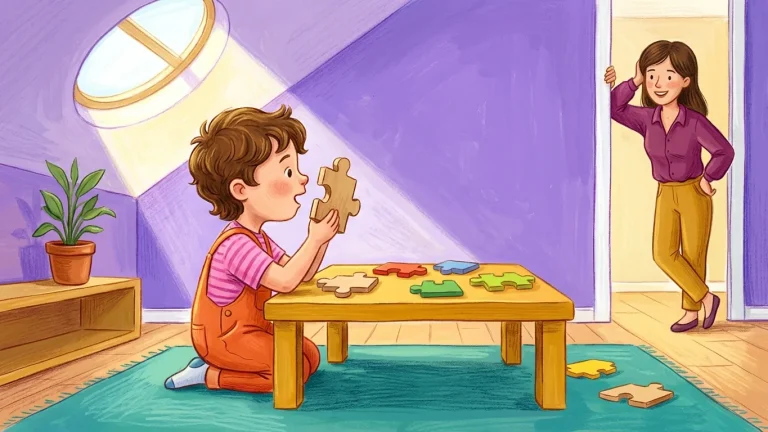
A father told us at the first meeting: "When my son sits at the table, he props his head on his hand. Five minutes later he is sliding off the chair."
The boy was four, and hypotonia had been noted when he was a baby. Yet nobody had told the family what to do in everyday life. In fact, simply changing the chair changed mealtimes within the first week.
This guide exists to fill exactly that gap. First, let's look at the idea itself.
What Is Hypotonia?
Hypotonia is reduced resistance in a muscle when someone else moves the joint. In other words, when you bend your child's arm, the muscle pushes back less than expected. Parents often hear it called "floppy baby" or "low tone".
There is an important distinction here. Muscle tone and muscle strength are not the same thing. Peredo and Hannibal's 2009 review defines hypotonia as separate from weakness.
For example, one child has low tone but normal strength. Another child has both together. This distinction gives the doctor an important clue when looking for the cause.
Also, hypotonia is not the name of a single condition. Instead, it is a shared sign of many different conditions. So the sentence "my child has low muscle tone" is always followed by the question "so what is causing it?"
Hypotonia Signs: In Babies and Older Children
Hypotonia signs change with age. In babies, posture and how the baby feels when held stand out most. In older children, tiredness, sitting and hand skills draw attention.
| Age | What you may see | CDC milestone to compare |
|---|---|---|
| 0-4 months | Feels like a rag doll when held, head falls back, weak sucking | At 4 months, holds head steady without support when held |
| 4-9 months | Cannot push up on arms on tummy, folds forward when sat up | At 9 months, sits without support and gets into sitting alone |
| 9-18 months | Skips crawling, pulls to stand late, stands with legs very wide | At 18 months, walks without holding on |
| 2-4 years | Tires quickly, falls often, W-sitting, struggles on stairs | Falls behind peers in running and climbing |
| 4 years and over | Rests head on hand at the table, slides off the chair, holds the pencil loosely | Short stamina for preschool table work |
The CDC milestones in the table are skills most children have by that age. So a few weeks' delay on one milestone is not an alarm by itself. But if several milestones are late together, talk to your paediatrician.
How can you spot hypotonia in a baby?
For example, when you lift your baby under the arms, it may feel as if they are slipping through your hands. Also, lying on their back, the arms and legs rest flat and open to the sides. Normally, at this stage a baby keeps the arms and legs slightly bent.
Feeding difficulties, a weak cry and sleeping a lot may come with this. If there are feeding problems in particular, tell your paediatrician straight away.
What does hypotonia look like in a preschool child?
In 2005, Martin and colleagues asked paediatric physiotherapists and occupational therapists about children with low tone. As a result, the two professions agreed on these features: reduced strength and stamina, delayed motor skills and a rounded-shoulder posture.
What is more, these children often lean on something. Their joints are more flexible than usual, and attention and motivation drop quickly. This last point matters for families, because parents often see a tired child as "not trying".
What Causes Hypotonia?
In general, we group the causes of hypotonia into two main types. First, central hypotonia comes from the brain or spinal cord. Peripheral type, on the other hand, comes from the nerves, the muscles or the link between them.
According to Peredo and Hannibal, 60 to 80 per cent of cases are central. By contrast, peripheral causes make up 15 to 30 per cent. The same review notes that in about half of patients, history and examination alone are enough for a diagnosis.
| Group | Examples | Clue | First port of call |
|---|---|---|---|
| Central, genetic | Down syndrome, syndromes such as Prader-Willi | Facial and body features, developmental delay | Paediatric neurology, clinical genetics |
| Central, before or around birth | Lack of oxygen at birth, premature birth, differences in brain development | Difficult birth or neonatal intensive care in the history | Paediatric neurology |
| Peripheral | Spinal muscular atrophy (SMA), muscle diseases, myasthenia | Clear weakness, loss of skills | Paediatric neurology, urgent assessment |
| Systemic | Hypothyroidism, infection, metabolic conditions | Lethargy, feeding problems, poor weight gain | Paediatrician |
| No cause found | Idiopathic or "benign" hypotonia | Tests normal, development slow but moving forward | Follow-up with paediatric neurology |
Genetic tests and brain imaging may come up during diagnosis. However, a paediatric neurologist makes these decisions. Our centre does not diagnose or run tests; we offer the daily-life support that runs alongside the medical process.
Hypotonia and Down syndrome
In Down syndrome in particular, hypotonia is a finding in almost every child. This is why speech, feeding and motor development are affected together. Our guide to speech and language development in Down syndrome covers this in detail.
When Should You See a Doctor Straight Away?
Floppiness is usually something that changes slowly. However, some signs cannot wait. So if you notice any of the following, call your paediatrician the same day.
- Loss of skills: a baby who used to hold up their head or sit can no longer do it.
- Feeding problems: tiring while feeding, coughing, milk coming out of the nose or poor weight gain.
- Breathing: fast, shallow or laboured breathing.
- Sudden onset: in a baby under six months, floppiness over a few days with constipation, a weak cry and lethargy.
- Alertness: unusual sleepiness or being hard to wake.
The last two points in particular point to an emergency. Indeed, Peredo and Hannibal stress that sudden floppiness with constipation in a baby under six months should raise the possibility of infant botulism.
Does Hypotonia Go Away?
This is the question families ask most. Yet the honest answer is this: hypotonia depends on the cause. As a general rule, central type tends to ease over time, while some peripheral causes stay or progress.
In 2007, Strubhar and colleagues contacted the families of 105 children diagnosed with idiopathic hypotonia before the age of two. As a result, 10.5 per cent of the children had no remaining problems. In 32.4 per cent, mild difficulties such as a learning difficulty or language delay continued.
Also, in 40.9 per cent an intellectual disability or a genetic diagnosis emerged. Besides this, the average walking age in the mild group was 22 months. Moreover, more than half of the children in this group still had coordination, language and learning difficulties.
So the message for families is clear. Even when hypotonia is mild, keep an eye on language, hand skills and school readiness. This is because difficulties often show up after walking, at the table.
How Does Hypotonia Affect Daily Life?
On the other hand, low muscle tone does not affect motor development alone. Instead, it touches everything from sitting and eating to speaking and holding a pencil. The table below links what families describe most often with the reason behind it.
| Area | What you may see at home | Why it happens |
|---|---|---|
| Sitting | Sliding off the chair, lying on the table, propping the head on a hand | Trunk muscles cannot hold an upright posture for long |
| Eating | Slow chewing, holding food in the mouth, dropping bites often | Low tone in the jaw, lips and cheeks |
| Speech | Short sentences, a quiet voice, unclear sounds, drooling | Weak breath support and mouth muscle control |
| Pencil and scissors | Loose pencil grip, faint lines, giving up quickly | Not enough stability at the shoulder and wrist |
| Dressing | Cannot put on trousers standing, struggles with buttons | Needs balance and hand strength together |
| Attention | Leaves table tasks quickly, asks for breaks often | Staying upright costs the child extra energy |
The last row is especially important. In other words, with hypotonia a child spends part of their energy just staying upright. So less energy is left for attention and learning.
Hypotonia and speech
In fact, speech is a fast coordination of breath, voice and mouth movements. That is why hypotonia affects speech in some children too. For example, the child speaks in short breaths, cannot say sounds clearly and the voice fades in a long sentence.
However, not every child with low tone has a speech delay. If speech is delayed, do not look for the cause in the muscles alone, because understanding and using language also need to be checked. For the place of mouth exercises, see our guide to oral motor exercises.
7 Kinds of Daily Support for a Child With Low Muscle Tone
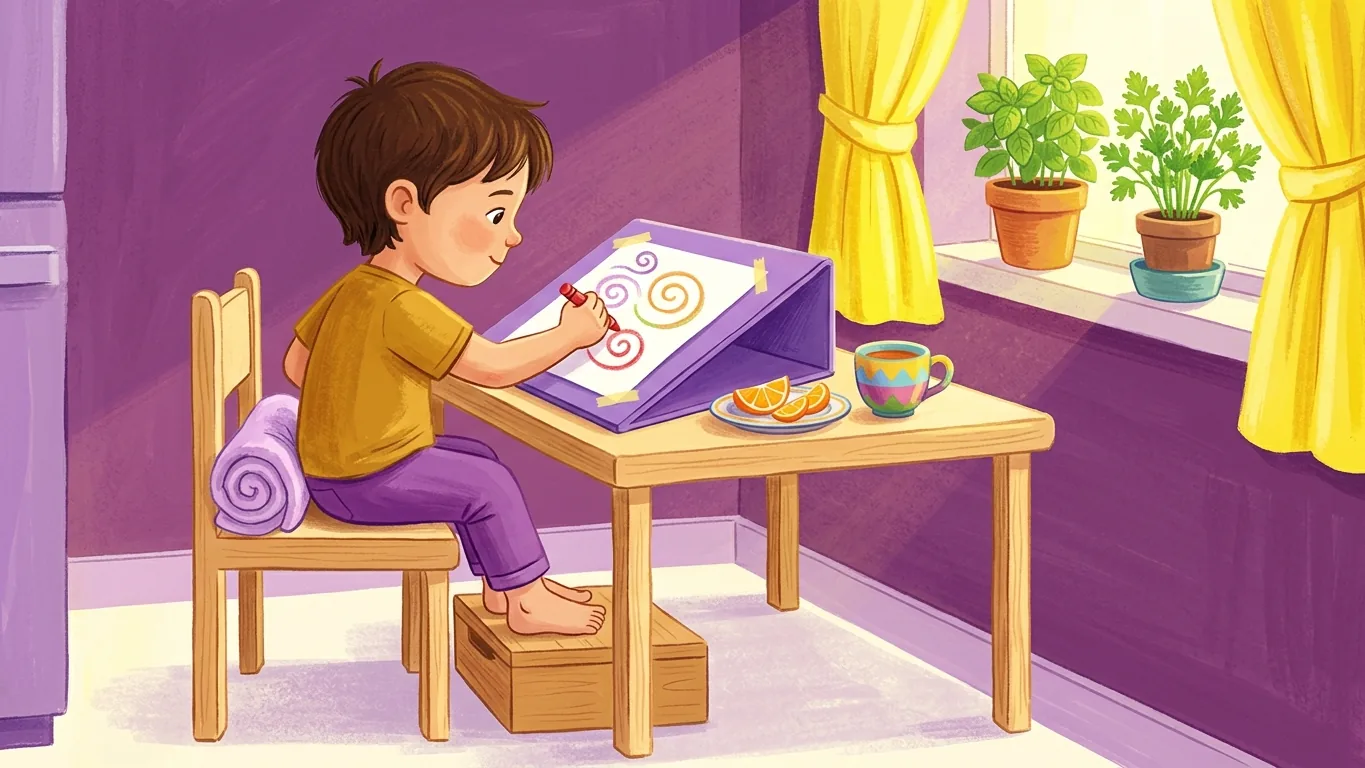
For hypotonia, the most useful thing you can do at home is often not exercise but adjusting the environment. This is because a child spends most of the day at the table, at a desk and on the floor. The seven steps below are the changes we suggest most often in occupational therapy.
1. A chair where the feet rest flat
If your child's feet dangle in the air, the trunk has no base of support. So put a box or a step under the feet. As a result, the hips, knees and ankles sit at roughly right angles.
2. The right table height
First, the table should sit a little above the elbow when your child is seated. This way the arms rest on the table comfortably. By contrast, if the table is too high the shoulders lift, and if it is too low the child slumps forward.
3. Side and back support
If the chair is too big, first place rolled towels at the sides. Also, put a non-slip mat on the seat to stop sliding. This small change often brings the first improvement at mealtimes.
4. Working on an upright surface
Use a sloped surface for colouring and drawing. For example, lay a thick ring binder on the table with the spine away from your child, or tape the paper to the wall. This way an upright surface brings the wrist into a natural position and works the shoulder.
5. Short, frequent movement breaks
First, match table time to your child's stamina. For example, five minutes is a good start for a four-year-old. Then give a two-minute movement break.
6. Heavy work play
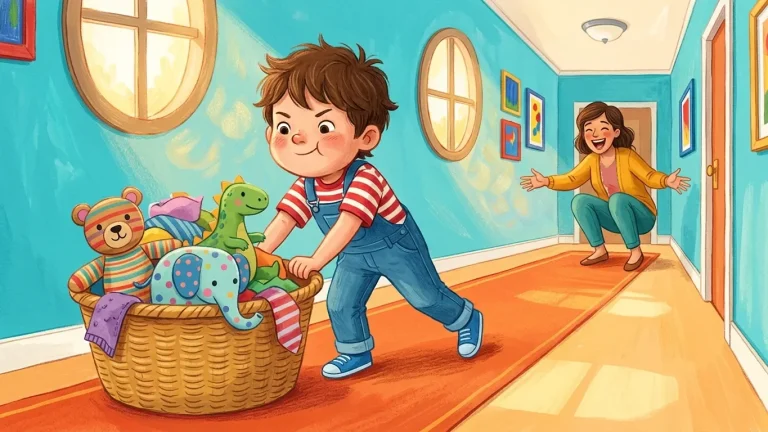
Pushing, pulling and carrying in particular send strong sensory input to the muscles. For example, carrying a shopping bag or pushing the laundry basket is a good start. These activities are also part of a sensory diet.
7. Planning for tiredness
Usually these children become clearly more tired towards the evening. So move harder tasks to the morning and let them do things like dressing while seated. Also, do not read a tired moment as laziness.
7 Games at Home for Hypotonia
In fact, play is the most lasting way to work with a child with low tone. This is because as long as the child is having fun, tiredness comes later. So keep the games in the table short and choose a moment when your child is keen.
| Game | How to play | What it supports | Age |
|---|---|---|---|
| Animal walks | Bear walk on all fours, crab walk backwards | Shoulder and trunk strength | 2 years and over |
| Wheelbarrow | You hold the legs, the child walks forward on their hands | Shoulder stability, readiness for pencil work | 3 years and over |
| Cushion mountain | Build a hill from cushions and pillows and climb it | Leg strength, balance | 18 months and over |
| Box push | Push a box full of toys to the other side of the room | Heavy work, trunk muscles | 2 years and over |
| Straw blowing | Blow a ping-pong ball into a goal on the table with a straw | Breath support, lip closure | 3 years and over |
| Dough kneading | Squeeze play dough, roll balls, hide beads inside | Hand strength, finger muscles | 2 years and over |
| Wall stickers | Put stickers on the wall above eye level | Shoulder, wrist position on an upright surface | 2 years and over |
For babies, though, tummy time in particular is the most important game. For example, lay your baby tummy-down on your chest and talk to them. This way your baby lifts their head to see you.
W-sitting is very common in these children, because this position gives a wide base of support. However, sitting this way all the time reduces the work of the trunk muscles. For more detail, see our guide to W-sitting.
What to Watch at Nursery and School
At nursery your child spends a large part of the day away from you. So a short meeting with the teacher helps the set-up you created at home continue at school. You can write the points below on one page and give it to the teacher.
- Sitting: ask for a step under the feet and side support on the chair. Also, at circle time on the mat, let your child sit with their back against the wall.
- Table work: break the activity into short parts and give a carrying job in between.
- Pencil: short, thick crayons, a sloped surface and a non-slip mat make the job easier.
- Playground: climbing and crawling games should be a normal part of the day, not a punishment.
- A signal for tiredness: agree on a shared sign with the teacher. This way your child can show they are tired even if they cannot say it.
For children getting ready for school, table-top skills matter even more. We cover this in our guide to the role of occupational therapy in school readiness.
Which Specialist Does What in Hypotonia?
Hypotonia is team work, as Harris's 2008 review also stresses. Indeed, each specialist looks at one part of the picture. The table below sums up who answers which question.
| Specialist | The question they answer |
|---|---|
| Paediatrician | Notices the sign, follows growth, makes the referral |
| Paediatric neurologist | Looks for the cause of hypotonia, orders tests, makes the diagnosis |
| Clinical geneticist | Plans genetic testing when a syndrome is suspected |
| Physiotherapist | Works on gross motor skills such as head control, sitting and walking |
| Occupational therapist | Adapts daily tasks such as sitting, eating, dressing, pencil use and play |
| Speech and language therapist | Works on feeding, mouth muscles, breath support and language development |
Also, families often ask about the difference between physiotherapy and occupational therapy. In short, physiotherapy focuses on movement itself, while occupational therapy focuses on using movement in daily tasks. We explain this in our guide to the difference between occupational therapy and physiotherapy.
4 Myths About Hypotonia
- "Low muscle tone means weak": tone and strength are different things. Some children have low tone but normal strength; the problem is more about stamina.
- "Sport will raise the tone": resting tone does not change much with exercise. Strength, stamina and skill, however, do grow with practice.
- "A lazy child": a child with low tone makes extra effort just to stay upright. So tiring quickly is not laziness.
- "They walk now, so the problem is over": the Strubhar 2007 data show that coordination and language difficulties continue after walking.
How We Work at Çocukla Akademi
At the first meeting with a child with low tone, we start by playing. Then we observe how they sit, use their hands, eat and talk. We also listen to how a day at home goes.
At the end of the observation, we set priorities together with you. For example, if daily tasks are hard, occupational therapy comes first. If speech or feeding is the main struggle, speech and language therapy steps in.
We work within the DIR Floortime framework, with your child's interests at the centre. At the same time, we take care to work towards the same goals as your child's neurologist and physiotherapist. We also give part of the sessions to parent guidance and the home set-up.
Frequently Asked Questions
What is hypotonia?
Hypotonia means the resting tension in the muscles is lower than usual. A baby feels floppy when held, and an older child tires quickly. Hypotonia is not a diagnosis but a sign whose cause needs to be looked into.
What are the signs of hypotonia in babies?
The most common signs are the head falling back, feeling floppy as if slipping through your hands, weak sucking, and arms and legs lying flat and open to the sides. A four-month-old baby usually holds their head steady without support when held.
Does hypotonia go away?
Hypotonia depends on the cause. Central type often eases with age, while in some muscle and nerve conditions it is permanent. Even in mild cases, keep an eye on language, coordination and learning.
When does a child with hypotonia walk?
Walking age varies a lot depending on the cause. In a study of children with no cause found, the average walking age in the mildly affected group was 22 months. Most children walk without holding on by 18 months.
Does hypotonia affect speech?
In some children, yes. Because breath support and mouth muscle control are weak, sounds may be unclear and sentences short. However, the cause of a language delay needs to be assessed separately.
Is hypotonia a sign of autism?
Not on its own. Some autistic children have low muscle tone, but most children with hypotonia are not autistic. If there are signs in social communication, see a child psychiatrist.
Which doctor should I see for hypotonia?
Start with your paediatrician. A paediatric neurologist looks for the cause, with a clinical geneticist if needed. An occupational therapist supports daily life, and a physiotherapist supports motor development.
What can I do at home for a child with hypotonia?
A chair where the feet rest flat, the right table height, drawing on an upright surface, short movement breaks and push-and-pull games are a good start. Move harder tasks to the time of day when your child is fresh.
Are hypotonia and hypermobility the same?
They are not the same, but they often go together. Hypermobility means the joints stretch more than usual. Most children with low tone also have flexible joints.
In summary, hypotonia is not an end point but a starting point. Clarify the cause with paediatric neurology, and support daily life by adapting the environment and through play. This way your child's energy goes into learning and play, not just into staying upright.
More guides from the same topic: gross motor skills, fine motor skills, a child with an awkward pencil grip, developmental delay and learning to feed themselves.
Sources and Further Reading
The definition, causes and course of hypotonia in this guide are based on the peer-reviewed work below. Links go to PubMed or the organisation's page.
- Peredo DE, Hannibal MC. The floppy infant: evaluation of hypotonia, Pediatrics in Review, 2009.
- Martin K et al. Characteristics of hypotonia in children: a consensus opinion of pediatric occupational and physical therapists, Pediatric Physical Therapy, 2005.
- Martin K et al. Clinical characteristics of hypotonia: a survey of pediatric physical and occupational therapists, Pediatric Physical Therapy, 2007.
- Strubhar AJ et al. Outcomes of infants with idiopathic hypotonia, Pediatric Physical Therapy, 2007.
- Harris SR. Congenital hypotonia: clinical and developmental assessment, Developmental Medicine and Child Neurology, 2008.
- Bodensteiner JB. The evaluation of the hypotonic infant, Seminars in Pediatric Neurology, 2008.
- CDC. Learn the Signs. Act Early: Milestones, 4, 9 and 18 month lists.